The neighborhoods we know best.
From Arcadia and the Biltmore corridor to Moon Valley, Desert Ridge, and Ahwatukee — roofing specified for real Phoenix exposure.
Arcadia
Mature shade canopy, estate parcels mixing citrus-era builds with contemporary additions — architecture-forward elevations.
Learn moreBiltmore
Luxury estates and condominiums along Camelback corridor architecture — tight HOA visibility.
Learn moreMoon Valley
Established north-central neighborhoods beneath mature shade canopy — HOA standards persist widely.
Learn moreNorth Phoenix
Master-planned districts spanning hillside parcels through densifying corridors near Desert Ridge.
Learn moreDesert Ridge
North Phoenix master-planned concentration — HOA-driven palettes across cohesive streetscapes.
Learn moreAhwatukee Foothills
South Mountain foothill subdivisions — cohesive HOA palettes and ridge geometries repeating street-to-street.
Learn moreEncanto-Palmcroft
Period Revival estates alongside modest bungalows — canopy-lined streets under preservation oversight.
Learn moreWillo Historic District
Historic bungalow fabric beneath cathedral canopy — district oversight shaping curb-facing assemblies.
Learn moreCentral Phoenix
Urban Mid-Century concentrations transitioning upward — foam flats abutting pitched tile streetscapes.
Learn moreParadise Valley (border)
Border estates pairing hillside exposures with architecture-forward street presence.
Learn more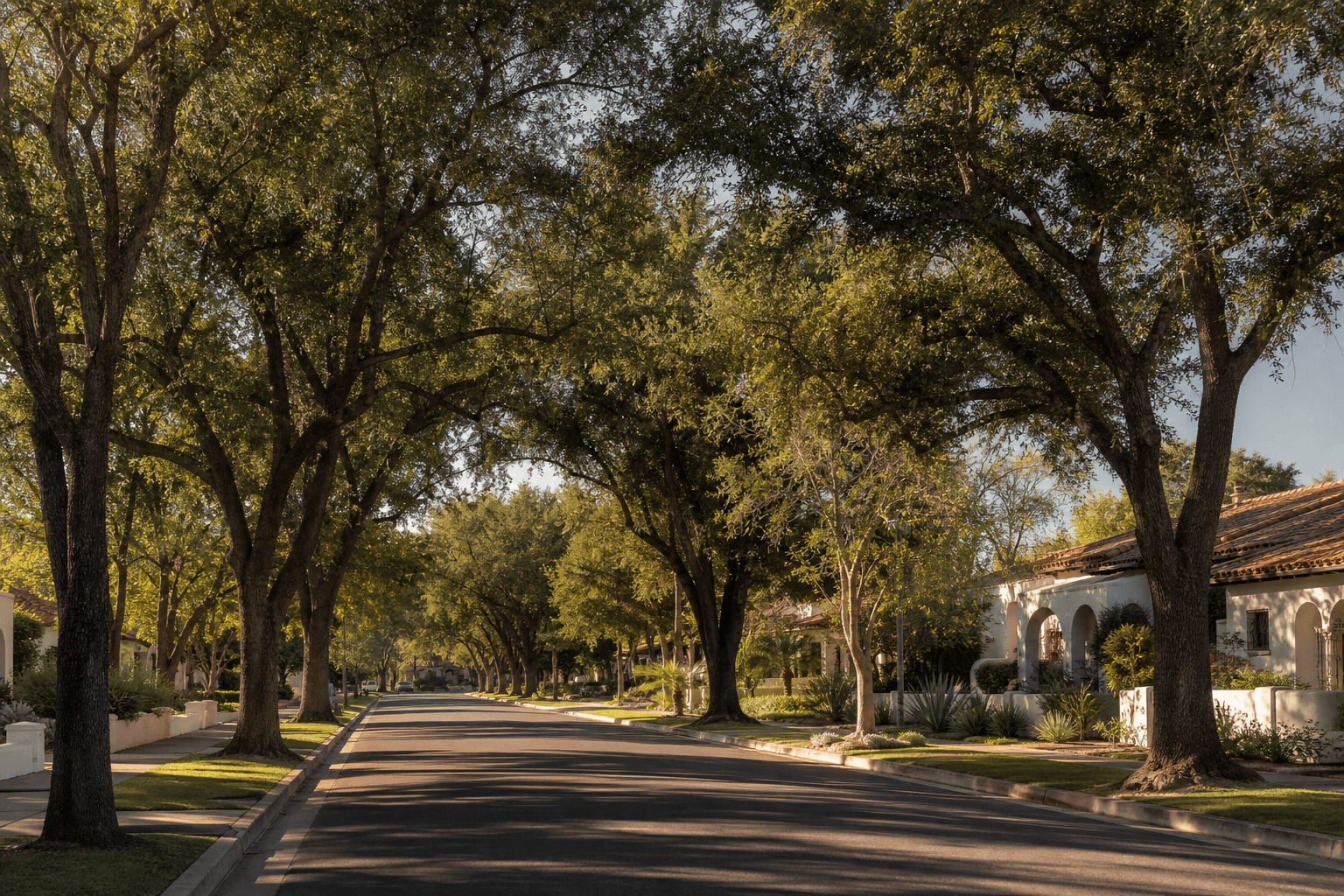
Phoenix service-area context
Mature canopy streets, HOA-controlled roof palettes, and heat-loaded exposures all change how a roof should be inspected and specified.
Work with a roofer who knows your neighborhood.
HOAs, architectural review, and exposure vary block by block. We coordinate submissions before crews mobilize.